Clean Water in Cabo Verde: Progress, Problems, and Possibilities

Each morning in Cabo Verde, an island country off the coast of West Africa, many people wake up uncertain if there will be enough clean water to drink, cook, or wash. Water is one of the most important things in life. It is needed for good health, growing food, and keeping homes clean. But in Cabo Verde, water is precious and sometimes hard to find.
This article will take you on a journey through Cabo Verde’s water story. We will look at the progress made, the problems still faced, and the possibilities for a better, brighter future. Along the way, you will learn about the people, the challenges, and the hope that keeps everyone working for clean water for all.
Where is Cabo Verde?
Cabo Verde is a group of ten islands in the Atlantic Ocean, not far from the coast of Africa. The islands are beautiful, with sandy beaches, green hills, and colorful towns. But there is one big problem: Cabo Verde does not get much rain. Some islands don’t even get enough rain to fill rivers or lakes. In fact, there are no large rivers at all. This makes finding clean water very difficult.
Why is Clean Water So Important?
Clean water is needed for:
- Drinking and staying healthy
- Cooking food
- Washing hands and bodies
- Cleaning homes and schools
- Growing crops and raising animals
Without clean water, people can get sick. Children cannot go to school if they are ill. Farmers cannot grow enough food. Life becomes much harder for everyone.
The Progress: Steps Forward for Cabo Verde
Even though Cabo Verde faces big water challenges, there has been a lot of progress over the years. Here are some of the good things that have happened:
More People Have Access to Clean Water
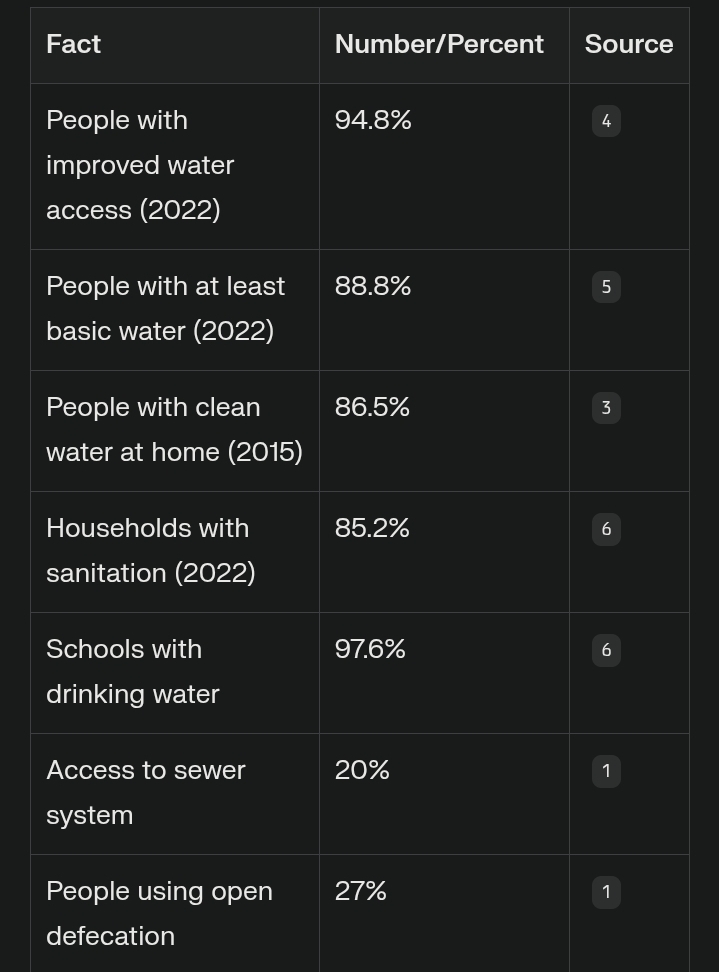
- In 2015, about 86% of people in Cabo Verde could use basic drinking water services.
- By 2022, nearly 95% of the population had access to an improved source of drinking water, like piped water, public fountains, or water from a neighbor’s house.
- Almost 89% of people now have at least basic water services, though this means some still do not have safe water at home.
Better Water in Schools
- Nearly all schools (approximately 98%) have access to drinking water and bathroom facilities.
Improved Sanitation
- About 85% of households have access to sanitation systems, which is much better than many other African countries.
- Since 2015, there has been an increase of almost 8% in the number of homes with sanitation.
New Water Projects
- New water supply and irrigation systems have helped farming communities, especially on Santiago Island. These projects have made life easier for almost 1,000 women farmers, who no longer need to walk long distances to fetch water.
- The government has created new water utilities and agencies to manage water better and help families get new connections to the water network.
Special Funds and Help
- A Social Access Fund has helped over 3,000 families get connected to clean water and over 2,000 get better toilets.
The Problems: Challenges That Remain
Even with all this progress, many problems remain. Let’s look at some of the biggest challenges:
Not Enough Rain
- Cabo Verde is very dry. There is little rainfall, and some islands, like Sal, are especially dry and depend almost completely on turning seawater into fresh water, a process called desalination.
- Droughts are common and can last for years, making water even scarcer.
Water Scarcity and Cost
- Because there are no big rivers or lakes, most water comes from underground or from the sea.
- Desalination (making fresh water from salt water) is expensive and uses a lot of energy.
- Many families, especially in rural areas, still do not have water in their homes. Only about 59% of people have water on their property or in their house.
- Sometimes, water must be delivered by truck, and the price can be high. Poor families may pay more for water than rich families.
Unequal Access
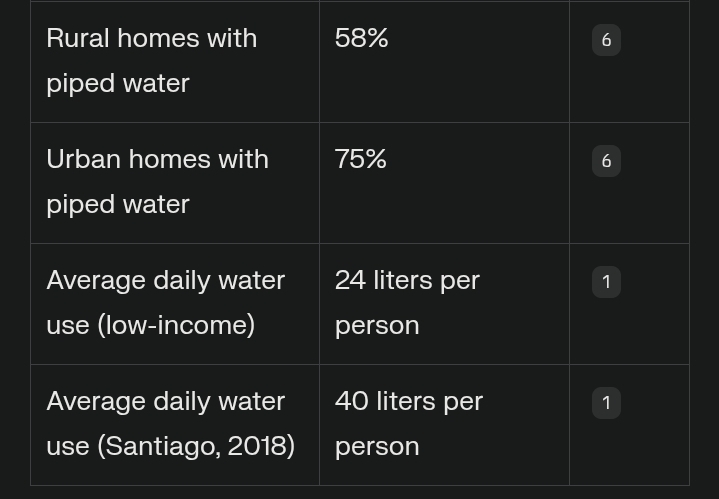
- In cities, about 75% of people have piped water. In rural areas, this number drops to about 58%.
- Some people still have to walk long distances to fetch water, often carrying heavy buckets. This job often falls to women and girls, who may miss school because of it.
Sanitation Still Lags
- Only 20% of people have access to a sewer system, and about 27% still use open spaces for toilets.
- Many rural families do not have flushing toilets or proper places to wash hands, which can lead to sickness.
Climate Change
- Cabo Verde is feeling the effects of climate change. There are more dry years, and the little rain that does fall is sometimes not enough to help crops grow.
- Rising temperatures and less rain make it even harder to find water.
Tourism and Water Use
- Tourists use much more water than local people. Hotels, swimming pools, and golf courses need a lot of water.
- Sometimes, water is sent to hotels while local families get less, leading to unfairness and frustration.
Real Stories: How Water Changes Lives
Let’s meet Amalia, a farmer on Santiago Island. For years, her family had to walk up to 20 kilometers to fetch water for their farm and home. It was hard work, and sometimes there was not enough water for their crops. But with a new irrigation project, Amalia and almost 1,000 other women farmers now have water close by. Their farms are growing more food, and Amalia’s son can go to university because the family is earning more money.
The Possibilities: Hope for the Future
Even with all these problems, there is hope. Cabo Verde is working hard to make sure everyone has clean water. Here are some of the ways the country is planning for a better future:
Using New Technology
- More desalination plants are being built to turn seawater into drinking water.
- There are projects to recycle water and use it for farming, so less fresh water is needed for crops.
Protecting Water Sources
- The government is teaching people to save water and not waste it.
- New laws are helping to protect underground water from pollution.
Helping the Most Vulnerable
- Special programs are making sure that poor families, women, and children get the help they need.
- The government is working with partners, like the United Nations and nonprofits such as Aqua Maya, to bring clean water to more people and places.
Building Stronger Communities
- New water and sanitation agencies are making it easier for families to get connected to water and toilets.
- Communities are learning how to manage water together and solve problems as a team.
How is Aqua Maya Helping?
Aqua Maya is one of the non profit organizations supporting clean water in Cabo Verde. They help by providing clean water solutions and encouraging water-saving habits in homes and hotels. Their work is especially important in places like Mindelo, where both locals and visitors need safe water for daily life.
What Can Be Done Next?
Cabo Verde’s journey to clean water for all is not finished. Here are some important steps that can help:
- Build more desalination plants that use renewable energy, like wind or solar power, to make fresh water without harming the environment.
- Fix old pipes and leaks so that less water is wasted.
- Make water affordable for everyone, especially poor families.
- Teach people about water conservation so everyone uses water wisely.
- Work with NGOs like Aqua Maya to bring new ideas and clean water access solutions to every island.
- Protect the environment so that water sources are not polluted or lost.
Key Facts and Figures
Conclusion
Clean water, beyond just a dream in Cabo Verde, is becoming a reality for more and more people every year. The journey is not easy, and there are still many challenges. But with hard work, new ideas, and help from nonprofits like Aqua Maya, Cabo Verde can make sure that every child, every family, and every visitor has the water they need to live, learn, and grow.
The story of water in Cabo Verde is a story of hope, courage, and community. By working together, the people of Cabo Verde are showing that even the driest places can bloom. Clean water is the gift of life, and everyone deserves a share.
Sources
1. https://borgenproject.org/sanitation-in-cape-verde/
2. https://reportersonline.nl/cape-verdes-water-and-electricity-crisis-the-hidden-costs-of-development/
4. https://unosd.un.org/sites/unosd.un.org/files/day2_session_iii_10._cape_verde_updated.pdf
5. https://www.worldeconomics.com/ESG/Environment/Access-to-Safe-Water/Cabo%20Verde.aspx
6. https://sdgs.un.org/basic-page/cabo-verde-34114
9. https://reliefweb.int/report/cabo-verde/cabo-verde-dref-operation-final-report-no-mdrcv003
10. https://www.africanews.com/2024/05/27/cape-verde-bearing-the-brunt-of-the-effects-of-climate-change/