Does Cabo Verde Have Enough Safe Drinking Water?

Some people live the kind of life we only see in movies – on islands surrounded by the deep blue sea, where the sun shines almost every day and the beautiful beaches stretch for miles. That’s Cabo Verde, a small island country made up of ten islands off the coast of West Africa.
It sounds like paradise – and in many ways, it is. But there’s a quiet challenge beneath the beauty: even with the ocean all around, people here can’t drink saltwater. They still need clean, fresh water to drink, cook, and stay healthy. And that’s not always easy to come by.
But is there enough safe drinking water for everyone in Cabo Verde? Let’s explore the real story behind the water that flows from taps, wells, and even the sea.
The Challenge: Why Water Is Hard to Find
Cabo Verde is a dry place. It does not rain much, and there are no big rivers or lakes. Most of the water that people use comes from underground or from the sea, after it is cleaned. The country often faces droughts, which means there is even less water than usual.
Key Facts About Water in Cabo Verde
- Low Rainfall: Some islands get less than 9 inches of rain each year.
- No Major Rivers: There are no big rivers to provide water.
- High Evaporation: The hot sun makes water disappear quickly.
- Droughts: Since 2017, Cabo Verde has faced some of its worst droughts in decades.
How Do People Get Drinking Water?
- Public Water Network
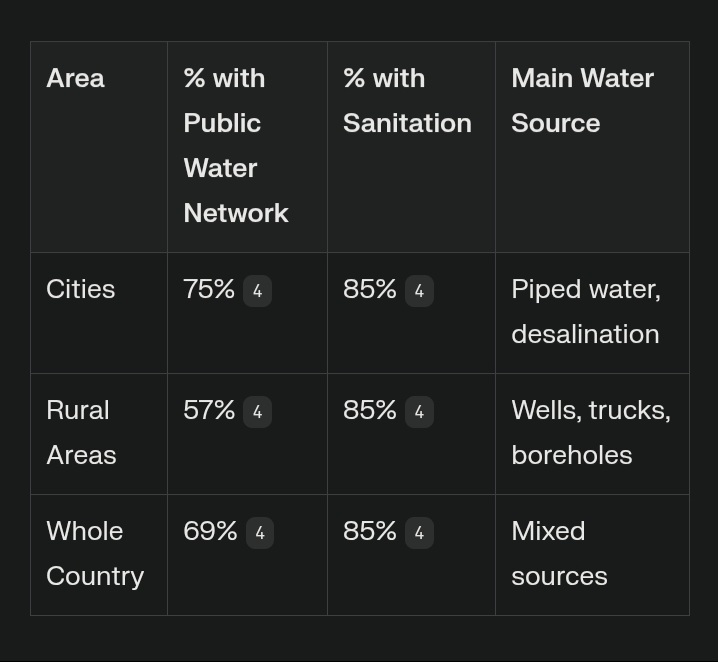
Most people in cities get their water from pipes that bring water to their homes. About 69 out of every 100 people use this public water network as their main source. In cities, approximately 75% of people have this service, but in the countryside, fewer people do.
- Wells and Boreholes
In rural areas, many families use wells or boreholes. Sometimes, these wells dry up or the water is not clean enough to drink.
- Desalination: Turning Seawater into Fresh Water
Because there is not enough fresh water, Cabo Verde uses special machines called desalination plants. These plants take salt out of seawater so people can drink it. Desalination is very important, especially on the driest islands like Sal and Boa Vista.
- Desalination plants provide water for about 50,000 people on some islands.
- A new plant on the island of Maio more than doubled the water supply for 7,000 people.
- Some plants use solar energy to save money and help the environment.
Is the Water Safe to Drink?
Progress and Problems
Cabo Verde has made progress in giving people safe water. Almost all schools (97.6%) have access to drinking water. About 85% of homes have some kind of sanitation system, which helps keep water clean.
But there are still problems:
- Only 59% of people have clean water in their homes or on their property.
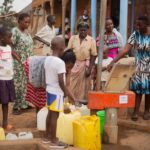
- Many families in rural areas still have to fetch water from far away or buy it from trucks.
- About 40% of treated water is lost before it reaches homes because of old pipes and leaks.
- Some people have to pay high prices for water, especially if it is delivered by truck.
Water Quality
Desalinated water is usually safe to drink, but sometimes water from wells or trucks can be dirty or carry germs. The government and NGOs like Aqua Maya work to make sure water is clean and safe for everyone and accessible for everyone.
Who Has the Most Trouble Getting Water?
City vs. Countryside
- Cities: Most people in cities have better access to water. About 75% of city dwellers use the public water network.
- Rural Areas: In the countryside, only about 57% have the same access. Many must use wells, which can dry up or become salty.
Poor Families
- Low-income families often use less water – sometimes only 24 liters per person per day, which is less than what is healthy.
- About 30% of the population lives in poverty, making it hard to pay for water.
What Is Being Done to Help?
Government Actions
The government of Cabo Verde is working hard to solve the water problem:
- Building more desalination plants, some powered by solar energy.
- Fixing old pipes to stop leaks and save water.
- Creating new laws and companies to manage water better.
- Helping poor families get water connections and toilets through special funds.
International Help
Other countries and groups are helping too:
- The African Development Bank funded projects to bring water to farmers and villages.
- Luxembourg helped pay for a big desalination plant on Maio island.
- Hungary is working with Cabo Verde to build more desalination plants for farming.
Community Projects
Aqua Maya keeps working to bring clean water to more people in West Africa, including Cabo Verde. They help reduce sickness that result from dirty water and teach people how to keep water clean.
Special Projects: Making a Difference
Desalination Plants
- Praia and São Vicente: Two big plants provide water for 50,000 people.
- Maio: A new plant more than doubled the water supply for 7,000 people and uses solar power.
- São Domingos: A plant gives water to 1,200 farmers and uses solar energy.
Helping Farmers
Water projects have changed life for many farmers, especially women. With better irrigation, they can grow more food and earn more money. This means they can send their children to school and have a better life.
Adapting to Climate Change: Protecting Water for the Future
Cabo Verde faces a big challenge from climate change, which makes droughts longer and rainfalls more unpredictable. This is especially hard for farmers and communities who depend on water for growing food and daily life. To help, several projects have started to teach people new ways to save and use water wisely.
One important effort is in the communities of Longueira and Covoada on Santiago Island, where farmers grow vegetables like carrots, beans, and tomatoes. These communities have faced droughts and floods that damage their land and water sources. To fix this, micro-irrigation systems were installed. These systems use small tubes to drip water directly to plants, saving a lot of water compared to traditional watering. They also built water tanks and fixed community wells to store and protect water during dry times.
These changes have helped farmers grow more food with less water, restored damaged soil, and reduced water stress on wells and springs. The use of drought-tolerant crops like melons and garlic also helps farmers survive when rain is scarce. This project not only improves water availability but also gives people new ways to earn money and feed their families.
At the national level, the government and partners like the United Nations Development Programme (UNDP) are working on bigger plans to manage water better across the islands. They focus on nature-based solutions like planting trees to protect watersheds, using drip irrigation, and recycling water. These efforts aim to build strong communities that can handle storms, droughts, and other effects of climate change.
By combining traditional knowledge with new technology and community action, Cabo Verde is learning how to protect its precious water resources. This is essential to ensure that safe drinking water and enough water for farming will be available for future generations.
The Future: Will There Be Enough Water?
Good News
- More people have access to water now than ever before.
- New technology, like solar-powered desalination, is making water cheaper and cleaner.
- The government wants to give everyone safe water by 2030.
Challenges Ahead
- Climate change is making droughts worse, so there is less rain.
- Tourism uses a lot of water, sometimes more than local people.
- Old pipes and leaks waste a lot of water before it reaches homes.
- Some families still cannot afford to pay for water.
What Needs to Be Done?
To make sure everyone in Cabo Verde has enough safe drinking water, these steps are important:
- Build more desalination plants, especially in dry areas.
- Fix old pipes to stop leaks and save water.
- Help poor families pay for water and connect to the public network.
- Use solar and wind power to make water cheaper and protect the environment.
- Teach people how to keep water clean and use it wisely.
- Support groups like Aqua Maya that bring water to those in need.
Table: Water Access in Cabo Verde
Conclusion
Cabo Verde is working hard to make sure everyone has enough safe drinking water. There have been big improvements, but there is still work to do. Many people, especially in the countryside, still struggle to get clean water every day. Droughts, old pipes, and high costs make things harder.
But with new technology, help from other countries, and the work of Aqua Maya and other NGOs, there is hope. If everyone keeps working together, one day all children in Cabo Verde will be able to drink clean, safe water whenever they are thirsty.
Key Takeaway: Cabo Verde does not yet have enough safe drinking water for everyone, but things are getting better. With more help and smart ideas, the dream of safe water for all can come true.
Sources
1. https://reliefweb.int/report/cabo-verde/cabo-verde-dref-operation-final-report-no-mdrcv003
2. https://reportersonline.nl/cape-verdes-water-and-electricity-crisis-the-hidden-costs-of-development/
3. https://borgenproject.org/sanitation-in-cape-verde/
4. https://sdgs.un.org/basic-page/cabo-verde-34114
5. https://www.acciona.com/projects/swro-cabo-verde
7. https://www.maiocapeverde.com/latest/desalination-plant-renewables-maio-cape-verde-opens.html
9. https://www.elementalwatermakers.com/municipality-in-cape-verde-signs-mou-for-water-project/