How Guinea is Tackling Water Scarcity: Innovations in Rural Water Access

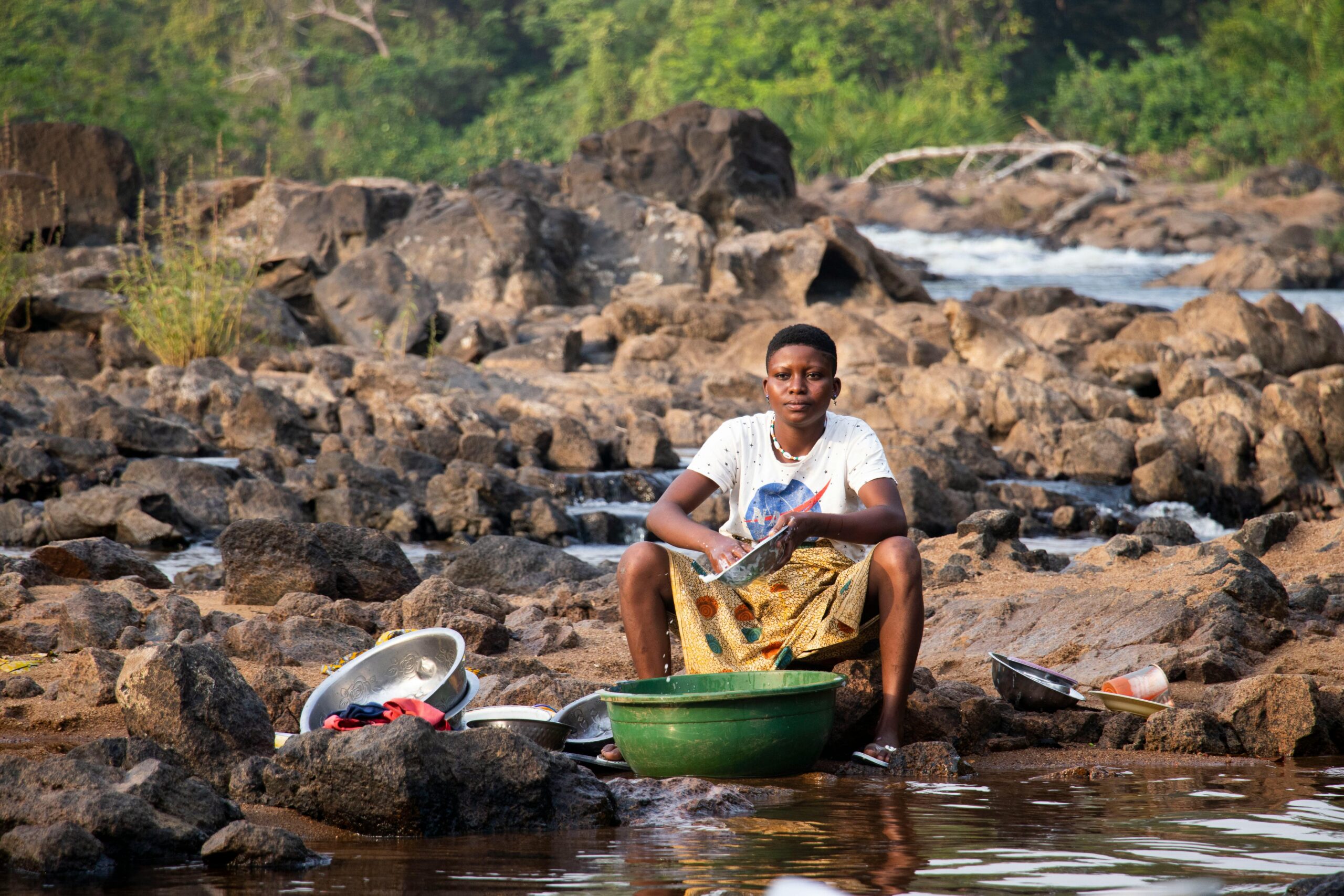
In rural Guinea, where over 60% of the population lives, water scarcity shapes daily life, limiting access to clean, reliable sources for drinking, farming, and hygiene. With rivers and wells often contaminated or dry, communities face health risks and economic challenges. Yet, Guinea is fighting back with innovative technologies, community efforts, and partnerships. Organizations like Aqua Maya, dedicated to improving water access for West African communities, are helping rural areas secure safe water. This article explores how Guinea is addressing rural water scarcity, highlighting solutions that promise a brighter future by 2025.
The Reality of Water Scarcity in Rural Guinea
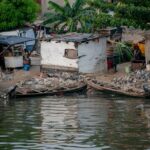
Water scarcity in rural Guinea means more than just a lack of water – it’s about the struggle to find safe, accessible sources. Only about half of all Guineans have access to improved water sources, and just 18% have access to proper sanitation facilities. Many rely on unprotected wells, ponds, or rivers, which dry up in the dry season (December to May) or become polluted during floods.
This scarcity fuels health crises. There are cases of diarrheal diseases in Guinea, largely tied to unsafe water. Socially, women and children spend hours fetching water, missing school or work. A WHO report stated that better water access, sanitation, and hygiene could save 1.4 million lives per year. Heavy rains and dry spells create water access challenges. Floods contaminate wells and rivers with bacteria and debris, while droughts dry up surface water.
Poor Infrastructure
Rural Guinea lacks the piped systems found in cities like Conakry, managed by the Société des Eaux de Guinée (SEG). Instead, communities use hand-dug wells or boreholes, many of which are broken or poorly maintained. A lot of rural water points in Guinea are non-functional due to neglect or lack of funds.
Water Contamination
Available water is often unsafe. A study in Guinea-Bissau, with similar conditions, showed all rural water sources had fecal contamination, including E. coli. In Guinea, open wells and rivers are polluted by livestock, human waste, and farming runoff, with nitrates posing health risks. Most rural water sources fail safety standards.
Economic Barriers
Poverty limits access to safe water. Wealthier households can afford private wells or bottled water, but low-income families rely on free, unsafe sources. This gap drives the need for equitable solutions, like those supported by Aqua Maya, which focuses on sustainable water access for rural communities.
Impacts of Water Scarcity
Water scarcity in rural Guinea has far-reaching effects. Health risks are severe, with deaths of children before age five, often from diarrhea linked to contaminated water. Floods are more strongly associated with cholera outbreaks, yet the prevalence of cholera outbreaks is higher during droughts because of their long duration.
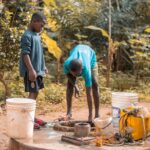
Socially, fetching water consumes hours, especially for women and girls. This reduces time for education and income-generating activities, perpetuating poverty. Economically, polluted rivers harm fishing and farming, key rural livelihoods. Plastic waste from bottled water, without recycling systems, pollutes rural landscapes and waterways, adding environmental strain.
Innovative Solutions for Rural Water Access
Guinea is tackling water scarcity with creative technologies and approaches designed for rural needs. These innovations aim to provide safe and sustainable water.
Solar-Powered Water Pumps
Solar-powered pumps draw groundwater from deep boreholes, ensuring a steady supply even in dry seasons. They use renewable energy and need little maintenance, making them ideal for remote areas.
Rainwater Harvesting Systems
Rainwater harvesting collects and stores water from rooftops or catchments, providing a clean source during the rainy season. UNICEF has installed these in rural schools, serving students and nearby households.
Ceramic Water Filters
Ceramic filters, made from local clay, remove bacteria and sediment. They’re affordable, portable, and electricity-free, perfect for rural homes. There’s usually a significant drop in diarrhea cases when these filters are used.
Fog Harvesting
Fog harvesting, an emerging technology, captures water from fog using mesh nets, particularly in Guinea’s hilly regions, like Fouta Djallon. Pilot projects, supported by NGOs, have shown promise, with proof that one net can collect between 200–400 liters of freshwater daily during foggy seasons. While fog harvesting is still experimental, this could supplement rural water supplies.
Borehole Rehabilitation
Many rural boreholes are broken. Non-governmental organizations like UNICEF are repairing them, adding hand pumps or solar-powered systems. These efforts are restoring Guinea’s rural water points, reaching thousands.
Mobile Water Treatment Units
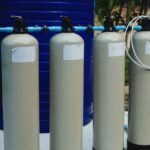
Mobile units purify contaminated water during emergencies, like floods, using filtration and chlorination. The Red Cross has deployed these in Guinea, serving up to 5,000 people per unit during cholera outbreaks.
Government and NGO Support
The government, backed by the World Bank, is expanding rural water access. The 2020 Rural Water Supply Project plans to install 1,000 new boreholes by 2026, targeting 500,000 people. By 2023, 20% of these were complete, showing progress despite delays.
NGOs are critical. The International Committee of the Red Cross (ICRC), UNICEF, and some others have installed boreholes, trained communities, and promoted hygiene, increasing access to improved water sources. Aqua Maya is contributing by developing sustainable water projects in rural Guinea, working with locals to ensure lasting impact.
Practical Tips for Rural Communities and Visitors
- Residents: Use ceramic filters or boil for daily water. Join water committees to access NGO-supported boreholes and learn maintenance.
- Visitors: Avoid untreated water, including ice or foods washed in local sources. Carry bottled or filtered water in reusable bottles.
- Stay Informed: Check with local leaders or NGOs for water point updates, especially in dry seasons.
- Hygiene: Use treated water for handwashing and cooking to prevent illness.
The Economic Benefits of Rural Water Access
Improved water access in rural Guinea boosts local economies, transforming livelihoods. Clean water enhances agricultural productivity, as farmers can irrigate crops reliably. Access to safe water increases crop yields in Guinea’s rural farms, raising incomes for smallholder families.
Water access also supports small businesses, like food processing or livestock rearing, which rely on clean water. Women, freed from hours of water fetching, can start enterprises, contributing to household income. A 2022 World Bank report noted that rural water projects in Guinea generated 10% more economic activity in communities with new boreholes.
Health improvements from safe water reduce medical costs and absenteeism, allowing more time for work. Aqua Maya’s projects, which prioritize sustainable water systems, are helping rural communities unlock these economic gains, creating a cycle of prosperity and resilience.
The Role of Community Action in Improving Water Safety
Rural communities are driving change. Water committees manage boreholes and wells, keeping them clean and functional. Community-managed water points in Guinea, and in any country at all where water is scarce, are much more likely to remain operational. These groups also promote hygiene, like using safe water for cooking, to reduce disease.
Some villages pool funds to repair wells or install rainwater harvesting systems, cutting reliance on polluted sources. Aqua Maya supports these efforts, collaborating on projects that empower communities to maintain safe water systems. Local action, paired with external support, is transforming rural water access.
Hope for Rural Guinea in 2025
By 2025, Guinea’s rural water future looks promising. Solar pumps, fog harvesting, and ceramic filters are scalable solutions reaching more villages. Community action ensures sustainability, while government and NGO partnerships expand access. Aqua Maya’s work with rural communities is part of this progress, tailoring solutions to local needs.
With continued effort, Guinea could double the number of rural residents with safe water beyond 2025, improving health, education, and economies. Until then, innovation and collaboration are key to overcoming water scarcity.
Conclusion
Rural Guinea’s water scarcity, driven by climate, infrastructure, and economic challenges, affects millions, but innovative solutions are creating change. Solar pumps, rainwater harvesting, fog harvesting, and community-led efforts are improving access to safe water. Aqua Maya’s projects are helping rural communities build sustainable systems, paving the way for a healthier future.
Residents and visitors can support these efforts by using safe water practices and engaging with local initiatives. Guinea’s path to universal water access is within reach, promising a brighter future for rural communities.
FAQs
What makes water scarce in rural Guinea?
Climate shifts, broken wells, and contamination limit safe water access.
What technologies are improving rural water access?
Solar pumps, rainwater harvesting, ceramic filters, and fog harvesting provide clean water.
How can rural residents ensure safe water?
Boil water, use ceramic filters, or access community-managed boreholes.
Are government programs helping rural water access?
Yes, projects like the World Bank’s borehole initiative are expanding access, though slowly.
How does water access boost rural economies?
Clean water improves farming, supports businesses, and reduces health costs.
Sources
1. https://www.scirp.org/journal/paperinformation
2. https://www.unicefusa.org/stories/tapping-safe-water-guinea
3. https://www.developmentaid.org/news-stream/post/157410/water-scarcity-in-rural-africa-eo
4. https://gh.bmj.com/content/10/1/e016491
5. https://allafrica.com/stories/201309161890.html
6. https://washmatters.wateraid.org/sites/g/files/jkxoof256/files/2022-04/Solarpumping.pdf