The Future of Water Access in Guinea: Sustainable Projects Transforming Lives

Imagine Guinea in 2030: every village has a clean water source, children no longer miss school to fetch water, and communities thrive with healthier lives and stronger economies. Can you see it?
This vision is actually becoming reality through sustainable water projects that are transforming Guinea, a West African nation long challenged by water scarcity and contamination. From solar-powered systems to women-led initiatives, these efforts are reshaping lives. Organizations like Aqua Maya, dedicated to improving water access for West African communities, are helping drive this change. This article explores Guinea’s path to universal water access, highlighting sustainable projects that promise a brighter future by 2025 and beyond.
The Current Water Crisis in Guinea
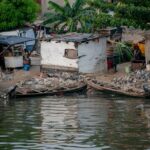
Guinea’s water challenges are significant. Only a fraction of Guinea’s population has access to improved water sources, leaving others reliant on unsafe wells, rivers, or ponds. Urban areas, served by the Société des Eaux de Guinée (SEG), face contamination from aging pipes, while rural areas, home to most Guineans, depend on unprotected sources prone to pollution. A lot of rural water sources are contaminated with fecal matter or chemicals, like nitrates.
Waterborne diseases are a major concern. Cases of diarrheal illnesses in Guinea, largely linked to unsafe water, have been reported. Cholera and typhoid remain risks, especially during the rainy season when floods spread pathogens like E. coli.
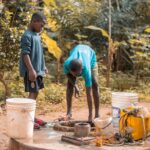
Socially, water scarcity burdens women and children, who spend hours fetching water, limiting education and work opportunities. Economically, polluted water harms farming and fishing, key livelihoods in Guinea.
Challenges to Sustainable Water Access
Environmental Pressures
Guinea’s climate, with heavy rains and dry seasons, complicates water access. Floods contaminate sources while droughts reduce availability.
Infrastructure Gaps
Many urban water systems in Guinea are old and poorly maintained, leading to contamination risks and service interruptions. In rural areas, the situation is even more challenging, with many water points either broken or unreliable. To make lasting progress, sustainable water projects must focus on fixing these infrastructure gaps rather than depending on frequent, costly repairs.
Economic Barriers
Poverty limits access to safe water. Low-income households cannot afford private wells or bottled water, relying on unsafe sources. Sustainable solutions must be affordable and scalable.
Maintenance and Ownership
Many water projects fail because they aren’t properly maintained. Without community involvement and regular oversight, systems like boreholes often break down over time. For long-term success, it’s important to train local residents and make them part of the solution.
Sustainable Projects Transforming Guinea
Guinea is embracing sustainable water projects that prioritize durability, affordability, and environmental harmony. These initiatives are setting the stage for universal water access.
Solar Distillation Systems
Solar distillation uses sunlight to purify water, removing bacteria and chemicals without needing electricity. This makes it a good option for rural parts of Guinea, where power supply is limited. With the right support, pilot projects in regions like Kankan could help show how solar distillation can be expanded to serve more communities.
Bio-Sand Filters
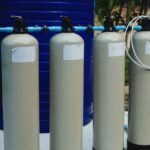
Bio-sand filters are made from local materials and use layers of sand and helpful microbes to clean water. They don’t need electricity, cost little to maintain, and can last for years. These filters are especially useful in rural communities, helping reduce the risk of waterborne diseases. With the right support, they can make a big difference in homes that lack access to clean water.
Atmospheric Water Generators
Atmospheric water generators (AWGs) extract moisture from the air to produce clean drinking water, making them especially useful in areas with limited access to safe water sources. These systems can operate using electricity or solar power, offering flexibility for deployment in off-grid or rural settings. While initial costs can be high, pilot projects in various regions have demonstrated their potential to provide sustainable water solutions to communities, schools, and healthcare facilities.
For instance, a project in Djibouti successfully installed a solar-powered AWG with a production capacity of up to 5,000 liters per day, providing clean water to areas facing severe water scarcity. Implementing similar projects in regions like Guinea could offer a viable solution to water access challenges, particularly in rural schools and communities.
Protected Boreholes with Solar Pumps
Solar-powered boreholes offer a sustainable solution for accessing groundwater in rural areas. By utilizing renewable energy, these systems reduce reliance on traditional fuel sources and lower operational costs. Their implementation in Guinea has shown promise in enhancing water availability for communities. Training local community members in the operation and maintenance of these systems is crucial to ensure their longevity and effectiveness.
For instance, UNICEF has been actively involved in improving sustainable water access in rural Guinea. Their initiatives include the construction of solar-powered water systems and the training of community water committees to manage and maintain these facilities effectively.
Rainwater Harvesting Networks
Rainwater harvesting systems collect and store rainwater, providing a valuable source of clean water during the rainy season. These systems are particularly beneficial in rural areas, where access to safe drinking water is often limited. By capturing rainwater, communities can reduce their reliance on distant or contaminated water sources. Implementing such systems in schools and villages can improve water availability and support better hygiene practices.
For instance, UNICEF’s Water for Guinea project has been working to improve access to safe water in regions like Labé by implementing sustainable water solutions, including rainwater harvesting systems.
A Case Study: Transformation in Kouroussa
In Kouroussa, a rural town in Upper Guinea, a project introduced solar-powered boreholes and bio-sand filters to improve access to clean water. Previously, residents had to travel long distances to fetch water, often from contaminated sources. The new systems have brought clean water closer to homes, reducing the prevalence of waterborne diseases. Community members, like Fatoumata Diallo, have utilized the available water to cultivate vegetables, enhancing their livelihoods. This project shows how clean water can change lives, and it’s the kind of solution Aqua Maya is working to bring to other communities too.
For instance, WaterAid’s project in the D’Ka community in Kebbi, northwestern Nigeria, constructed a solar-powered borehole with a 20,000-liter capacity, improving health, gender equality, and economic opportunities in the community.
Government and NGO Leadership
The Guinean government, with support from the World Bank, is focusing on improving access to clean and safe water. Initiatives, like the Guinea Water and Sanitation Project, aim to enhance water services in both urban and rural areas, including plans for new boreholes and upgrades to existing water systems.
In Conakry, efforts are underway to modernize the water infrastructure, aiming to reduce contamination and improve reliability. NGOs play a crucial role in these developments. For instance, UNICEF has been active in constructing boreholes and implementing community training programs to ensure sustainable water access in rural regions. Aqua Maya is also contributing by developing sustainable water projects and collaborating with local communities to ensure long-term success and ownership.
The Role of Green Technology in Water Sustainability
Green technologies are key to the future of water in Guinea. Solutions like solar distillation and atmospheric water generators help reduce the need for fuel, making them better for the environment. Bio-sand filters also use natural materials, which means less harm to the land and water.
In many communities, solar-powered boreholes are now being used instead of diesel pumps. These systems are easier to maintain and cost less in the long run. They also work well during dry seasons, helping communities get water even when the weather is harsh.
By choosing green solutions, Guinea is taking important steps toward a stronger, more reliable water system.
Practical Steps for Supporting Guinea’s Water Future
- Residents: Adopt sustainable practices like rainwater harvesting or bio-sand filters. Join water committees to maintain local systems.
- Travelers: Use reusable bottles and purifiers to reduce plastic waste. Support NGOs like Aqua Maya by sharing their work or donating.
- Advocates: Raise awareness about Guinea’s water projects on social media to attract funding and attention.
- Policymakers: Invest in green technologies and community training to scale sustainable projects.
Hope for 2030
Guinea is making significant strides towards providing clean water to more of its people. With support from partners like the World Bank, the country is implementing projects to build new water systems and improve existing ones. These efforts aim to bring safe drinking water closer to homes, especially in rural areas.
Organizations, such as UNICEF and WaterAid, are also playing a vital role. They work with communities to install water systems and teach people how to maintain them. This approach ensures that the solutions are sustainable and meet the specific needs of each community. Aqua Maya’s community-driven projects are part of this vision, ensuring solutions are locally relevant and enduring.
Education and women’s empowerment are laying the foundation for lasting change. Women are being trained to manage water points and educate others about hygiene. This not only improves water access but also supports women’s leadership and economic opportunities.
By embracing green technologies and focusing on community involvement, Guinea is building a resilient water system. These efforts contribute to better health, education, and economic growth, setting an example for sustainable development in Africa.
Conclusion
Guinea’s future of water access is bright, driven by sustainable projects like solar distillation, bio-sand filters, and women-led initiatives. These efforts are transforming lives, reducing disease, and empowering communities. Aqua Maya’s work is helping to make clean water a reality for all Guineans. By supporting these projects, residents, travelers, and advocates can contribute to a healthier, more equitable Guinea by 2025 and beyond. The path to universal water access is clear – sustainability and community action will lead the way.
Sources
1. https://www.sciencedirect.com/science/article/pii/S2405844024147822
2. https://www.ruralelec.org/bringing-safe-and-sustainable-water-to-africas-camps/
3. https://www.unicefusa.org/sites/default/files/GuineaWASHProjectProposal2018.pdf
4. https://www.unicefusa.org/sites/default/files/WaterForGuineaAnnualReportYear2.pdf
5. https://www.gwp.org/en/waterchangemakers/change-stories/563500/
6. https://www.worldbank.org/en/topic/water/brief/inclusive-water-institutions-platform