The Gambia’s Water Supply: What’s Working and What’s Not?

The Gambia is a small West African country, and like everywhere else, water is a precious resource that affects everyone’s daily life. Over the years, the country has made important progress in providing safe drinking water to its people, but challenges remain. This article explores what is working well in The Gambia’s water supply system and what still needs improvement, using clear facts and simple language.
What’s Working in The Gambia’s Water Supply?
● Increased Access to Improved Water Sources
One of the biggest successes in The Gambia is the rise in the number of people who have access to improved water sources. Improved water sources include piped water, boreholes, protected wells, and springs that are safer to drink from than unprotected sources. According to the 2021 Joint Monitoring Program, about 81% of Gambians now use improved water sources for drinking, up from 79% in 2015. The World Bank also reported that in 2022, about 85.65% of the population had access to at least basic drinking water services. This progress shows that more people are getting safer water than before.
● Use of Solar-Powered Water Systems
The Gambia has adopted solar-powered water supply systems, especially in rural areas. These systems use solar energy to pump water from boreholes to elevated tanks, which then supply water to multiple villages through pipes and public taps. This technology is preferred by the government because it is sustainable and cost-effective in the long run. The Rural Water Supply and Sanitation Project has installed new solar-powered water systems and upgraded existing ones, benefiting around 65,000 rural residents. Solar power helps reduce dependence on expensive and polluting fuel sources.
● Community-Led Sanitation Efforts
Improving sanitation is closely linked to water supply. The Gambia has made efforts to reduce open defecation and improve hygiene through Community-Led Total Sanitation (CLTS). This approach encourages communities to build and use latrines by raising awareness and using peer pressure. About 64.9% of the population now has access to improved sanitation facilities, and open defecation has dropped to about 1%. Schools, health centers, and public places are also getting better sanitation facilities.
● Government and Donor Investments
The government of The Gambia has invested steadily in water infrastructure, spending on average US$1.7 million per year between 2002 and 2011. Donors have also contributed significantly, with official development assistance averaging US$5.67 million annually, mainly for water supply and sanitation.
It is also worth noting that The Gambia has launched large-scale water supply projects to expand access, especially in urban and peri-urban areas. A key example is the WASIB project in the Greater Banjul Area, which aims to provide clean water to over one million people by extending water networks by hundreds of kilometers, increasing water production by 25%, and drilling deep wells up to 600 meters.
This €59.1 million initiative, supported by the French Development Agency and the European Investment Bank, also includes building a modern water quality laboratory and expanding storage capacity. The project is structured in phases from 2026 to 2027 and aligns with the country’s National Development Plan and Sustainable Development Goals.
These investments demonstrate a strong government commitment and international partnership to improve water infrastructure and service delivery.
What’s Not Working in The Gambia’s Water Supply?
● Inequality in Water Access
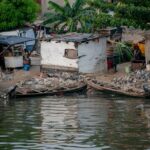
Despite progress, not everyone in The Gambia enjoys the same level of water service. Riverine communities and very poor households often have less access to safe water and sanitation than urban residents. Geographic challenges like high water tables in river areas make it difficult to build latrines and maintain open defecation-free status. This creates health risks and inequality. The government is working to focus on these underserved areas, but challenges remain.
● Environmental Challenges
The Gambia’s water resources face environmental threats. For example, saltwater intrusion from the ocean into the River Gambia threatens irrigation and freshwater supplies. Pumping water for irrigation can push saltwater further upstream, harming crops and drinking water sources. Deforestation for fuelwood and pollution from untreated industrial and domestic waste also degrade water quality.
● Incomplete Sanitation Coverage
While sanitation has improved, the goal of 100% open defecation-free status has not yet been achieved. The COVID-19 pandemic slowed progress, and sustaining sanitation gains in difficult areas remains a challenge. More innovation in sanitation technology and stronger community engagement are needed.
● Rural Water Supply Challenges
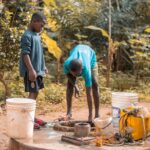
While urban areas have seen improvements in water access, rural communities face significant bottlenecks. Many rural water systems suffer from inadequate technology options, lack of trained personnel to maintain infrastructure, and insufficient funding for repairs and expansion. Seasonal water insecurity is common due to erratic rainfall, forcing some communities to rely on unsafe water sources during dry periods. This situation affects health outcomes, as contaminated water leads to diseases like diarrhea and cholera. Efforts to improve rural water supply include installing solar-powered pumps and training local water committees, but more investment and capacity building are needed to sustain these gains.
● Limited Data and Monitoring
Reliable data on water quality and quantity is scarce in The Gambia. The country lacks sufficient monitoring capacity to track water resources properly. This makes it hard for decision-makers to prioritize actions and investments effectively. Without good data, managing water sustainably and preventing pollution is difficult.
● Institutional and Data Gaps in Water Management
Effective water management in The Gambia is hindered by weak institutional capacity and limited data availability. The country’s National Water Policy aims to promote integrated water resources management (IWRM), but implementation faces challenges such as lack of legal frameworks, insufficient human resources, and poor coordination among agencies.
Moreover, there is a shortage of reliable hydro-meteorological data, which is crucial for planning and responding to water-related risks. Without good data and institutional support, it is difficult to monitor water quality, manage resources sustainably, or prepare for climate impacts. Strengthening institutions and improving data collection and sharing are priorities for future water security.
Climate Change and Its Impact on Water Security
The Gambia faces growing challenges from climate change that affect water availability and quality. Since the late 1960s, average rainfall has dropped by about 30%, and rainfall patterns have become unpredictable, with shorter and more irregular rainy seasons. Droughts in 2011 and 2014 severely reduced agricultural production, highlighting the country’s vulnerability. Rising temperatures and sea-level rise also threaten water resources through saltwater intrusion, especially in coastal and riverine areas. This intrusion increases salinity in groundwater, which is the main source of drinking water for most Gambians, making it unsafe for consumption and farming.
Climate-Smart Rural Water and Sanitation Development
To address climate change impacts and improve water and sanitation in vulnerable rural and riverine communities, The Gambia is implementing the Climate Smart Rural Water and Sanitation Development Project (CSRWASHDEP). This project uses an Integrated Water Resources Management (IWRM) approach to promote sustainable water use while improving sanitation and waste management. It aims to build resilience against droughts, floods, and saltwater intrusion by coordinating stakeholder actions and protecting water sources. The project also supports early warning systems and climate monitoring to help communities adapt better to changing conditions.
Role of Aqua Maya
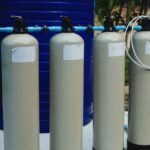
Non-profit charities like Aqua Maya are part of the solution by providing clean and safe drinking water for local communities in West Africa. Also, they provide technologies and services that help improve water quality and accessibility. Their involvement will support the government’s efforts to expand safe water supply, in urban and peri-urban areas where demand is growing.
Community-Based Adaptation and Private Sector Role
Communities in The Gambia are increasingly involved in managing their water and sanitation needs through approaches like Community-Led Total Sanitation (CLTS) and local water user groups. These initiatives raise awareness about hygiene and encourage the construction and use of latrines, helping reduce open defecation. On the private sector side, non-governmental organizations contribute their quota by providing clean water, particularly for areas in dire need of it.
Supporting community participation and private sector innovation is essential to complement government efforts and ensure sustainable water supply and sanitation services.
Community-Led Water Infrastructure and Local Financing
Local communities in The Gambia are increasingly managing water infrastructure with support from climate finance and development partners. For example, the LoCAL (Local Climate Adaptive Living Facility) program has funded over 160 projects, including solar-powered boreholes with water tanks supplying entire villages. Communities contribute small annual fees to maintain systems, ensuring sustainability. These projects often create local jobs and involve community members in decision-making, making water supply more resilient and tailored to local needs. Such grassroots initiatives complement national efforts and help reach remote areas.
Conclusion
The Gambia has made notable strides in improving water supply and sanitation. More people now have access to safe drinking water, thanks to solar-powered systems and community efforts. However, challenges like inequality, environmental threats, and data gaps still hinder full success. Continued investment, innovation, and focus on underserved communities will be key to ensuring that every Gambian can enjoy clean water and better health.
Water is a shared resource and a shared responsibility. The Gambia’s journey shows that with determination and smart solutions, progress is possible – but there is still work to be done.
Sources
4. https://www.unwater.org/sites/default/files/app/uploads/2017/05/GMB_pagebypage.pdf
5. https://www.unwater.org/sites/default/files/app/uploads/2017/05/GMB_pagebypage.pdf
6. https://www.lshtm.ac.uk/newsevents/news/2024/climate-change-and-water-insecurity-gambia
7. https://www.thegef.org/projects-operations/projects/10199
8. https://www.unicef.org/gambia/water-sanitation-and-hygiene