Where Do People in Côte d’Ivoire Get Their Drinking Water?

Côte d’Ivoire, a country on the southern coast of West Africa, is rich in rivers, lakes, and underground water. Yet, for many people, getting safe drinking water is still a daily challenge. The story of water in Côte d’Ivoire is one of contrasts between the lush, wet south and the drier north, between big cities and small villages, and between those with easy access to clean water and those who must struggle for every drop.
This article explores where people in Côte d’Ivoire get their drinking water, how the system works, the problems they face, and the efforts – both local and international – to bring safe water to everyone.
The Water Landscape of Côte d’Ivoire
Côte d’Ivoire is blessed with many water resources. The country has about 537 rivers, including four major river systems – the Bandama, Comoé, Sassandra, and Cavally – that flow from north to south. There are also large underground water reserves and many wetlands, especially in the south. These natural sources provide the backbone for the country’s water supply.
But while water is abundant in some areas, it is not evenly spread across the country. The south, with its heavy rainfall, has more water than the north, where some regions face regular shortages. This uneven distribution means that the source of drinking water, and how easy it is to get, depends a lot on where people live.
Main Sources of Drinking Water
People in Côte d’Ivoire get their drinking water from several key sources:
Surface Water (Rivers and Lakes)
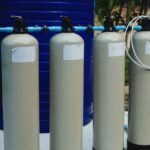
Many towns and cities rely on water drawn from rivers and lakes. The water is usually treated at plants before it is sent to homes and businesses. For example, the city of Séguéla, in the north, now gets much of its water from the Yani River, thanks to a new treatment plant and modular systems that clean and distribute the water.
Groundwater (Wells and Boreholes)
In rural areas, wells and boreholes are common. These tap into underground water, which is often cleaner than surface water but can be hard to reach. Many villages use hand pumps or solar pumps to draw water from these sources.
Rainwater
In some rural places, people collect rainwater during the wet season. This water is usually stored in tanks or barrels for later use. However, rainwater alone is rarely enough to meet all needs, especially during the long dry season.
Public Standpipes and Community Taps
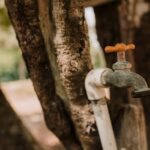
In cities and large towns, public standpipes, or shared water taps, are a lifeline for many families who do not have water piped directly to their homes.
Private Vendors and Water Resellers
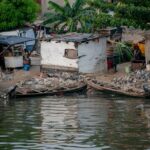
Where public systems are lacking or unreliable, people often buy water from private vendors. This water is sometimes delivered by truck or sold in small containers. It is usually more expensive and not always safe.
How the Water System Works
The water supply in Côte d’Ivoire is managed by a mix of government agencies and private companies. Here’s how it works:
Government Oversight
The National Drinking Water Office (ONEP) is responsible for building and expanding water supply systems, especially in rural areas.
Urban Water Supply
In cities and towns, the Société des Eaux de Côte d’Ivoire (SODECI) runs the water supply. SODECI is a public-private company that operates, maintains, and upgrades the water system under contracts with the government. It treats water from rivers or underground sources, then sends it through pipes to homes, businesses, and public taps.
Rural Water Supply
In rural areas, the system is less developed. Many villages rely on wells, boreholes with hand pumps, or small-scale water systems built by the government or aid groups. The government’s “Water for All” program has invested heavily in building new wells, mini water systems, and solar pumps in rural communities.
Progress and Challenges
Improvements in Access
- In recent years, Côte d’Ivoire has made progress. The rate of drinking water coverage improved from 72% in 2019 to 76% in 2021.
- The “Water for All” program has brought water to millions, especially in areas that were previously underserved.
Persistent Problems
- Despite these gains, big challenges remain. Access to clean water is still uneven. People in the south and in cities usually have better access than those in the north or in remote villages.
- Many rural communities still depend on old or damaged wells, which can dry up or become contaminated.
- In cities, rapid population growth and migration have put pressure on water systems. After the civil war, nearly half of Abidjan’s people lacked reliable water. Projects to expand and upgrade the system have helped, but demand keeps growing.
- Only about a quarter of the population has access to proper sanitation, which increases the risk of waterborne diseases.
- Water shortages, especially during the dry season or when dams and rivers run low, can leave entire regions without enough safe water.
The Human Impact
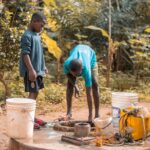
For many Ivorians, the search for safe water shapes daily life. In rural areas, women and children often spend hours each day walking to the nearest well or river. Carrying heavy buckets is tiring and takes time away from school or work.
When water is scarce or dirty, the risks are high. Drinking unsafe water can cause diseases like diarrhea, cholera, and typhoid. These illnesses are especially dangerous for young children. Hospitals see more patients during water shortages, and children often miss school when they are sick or helping fetch water.
Buying water from vendors is expensive, and poor families may have to choose between water and other needs. In some places, people are forced to use water from unsafe sources, like ponds or streams, when the main supply fails.
Solutions and New Approaches
Government Action
The Ivorian government has made water a priority. Major investments have gone into building new treatment plants, expanding water networks, and rehabilitating old infrastructure.
International Support
International organizations have helped fund and build new water systems. For example, a recent project will rehabilitate water infrastructure in 111 locations, bringing safe water to over a million people in rural areas.
Aid groups and NGOs have played a key role in building wells, teaching hygiene, and responding to emergencies.
The Role of NGOs: Aqua Maya’s Mission
Aqua Maya is a new US-based nonprofit with a big goal: to deliver clean water access to 20 million people in West Africa, including Côte d’Ivoire. Founded in 2024, Aqua Maya works closely with local communities to build water infrastructure, teach best practices for water hygiene, and promote long-term sustainability.
Aqua Maya’s approach is simple but powerful:
- Community Engagement: They work hand-in-hand with local leaders to make sure projects meet real needs.
- Sustainable Solutions: By using innovative technologies – like solar pumps and modular treatment units – they aim for lasting change.
- Transparency: All projects are tracked on an interactive map, showing donors exactly where and how their support is making a difference.
- Focus on Health: Reducing child mortality from waterborne diseases is a core goal.
As Aqua Maya expands its work in Côte d’Ivoire, it joins a growing network of groups committed to making clean water a reality for all.
The Future of Water in Côte d’Ivoire
Côte d’Ivoire has made real progress in bringing safe drinking water to its people. New investments, better planning, and help from groups like Aqua Maya are making a difference. But the job is not finished.
Key Challenges Remain:
- Reaching remote villages and the urban poor.
- Keeping up with population growth in cities.
- Protecting water sources from pollution and overuse.
- Ensuring that water systems are maintained and repaired.
Opportunities for Change:
- Expanding the use of solar pumps and modular treatment units.
- Training local people to manage and repair water systems.
- Teaching communities about hygiene and water safety.
- Building strong partnerships between government, NGOs, and local leaders.
Aqua Maya and other organizations are bringing new ideas and resources to the fight for clean water. By working together, they hope to build a future where every person in Côte d’Ivoire can drink safely, every day.
Conclusion
Where do people in Côte d’Ivoire get their drinking water? The answer depends on where they live, how much money they have, and what resources are nearby. Some draw water from rivers or lakes, others from wells deep underground. In cities, water may flow from a tap; in villages, it may come from a distant hand pump.
Progress is being made. New investments, better technology, and the work of groups like Aqua Maya are bringing hope to millions. But the journey is not over. Clean, safe water is a basic need, and the people of Côte d’Ivoire – like people everywhere – deserve nothing less.
As the country moves forward, the goal is clear: water for all, now and for generations to come.
Sources
2. https://dicf.unepgrid.ch/cote-divoire/water
3. https://opecfund.org/news/solutions-for-a-thirsty-and-crowded-abidjan
5. https://www.egis-group.com/projects/a-huge-drinking-water-supply-project-in-cote-d-ivoire
6. https://www.economie-ivoirienne.ci/en/activites-sectorielles/drinking-water.html